Industries
Manufacturing technology consulting
Request-for-quote intake, approvals, and customer order visibility

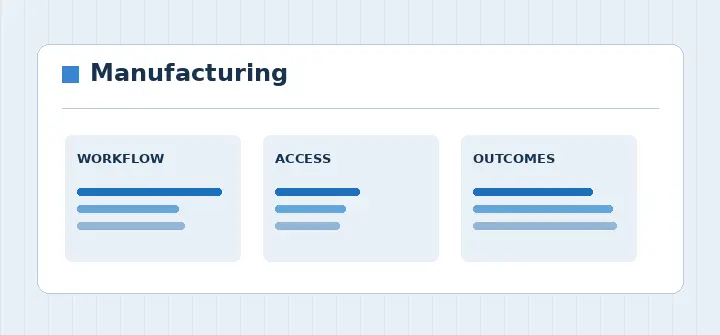
Where I start
Collect revision, material, quantity, and delivery requirements at intake. Track quote approval and build customer status from authoritative order data.
What to measure
RFQ completeness and response time by product line. Establish a baseline first so the team can tell whether the pilot improved operations.
Deployment and access
Use approved sources for operational information. Agree on staff responsibilities and review permissions before connecting external tools. Pilot with a limited workflow and expand when the operator can handle exceptions consistently.
Custom Business Operating Systems
How I scope technology for manufacturing
I start with the operating decision behind the website or software request. Walk through how an RFQ records material, dimensions, revision, quantity, and delivery needs. Review who approves substitutions and how quotes reflect the latest drawing. Test incomplete data and an updated requirement after quoting. Use verified technical capabilities and approved request instructions on buyer-facing pages.
Public website, client experience, and staff operations
Organize pages around processes, materials, and application requirements buyers actually compare. Have an engineering or quoting owner validate capabilities and published ranges. Explain how engineering reviews special tolerances and what to include for an RFQ. Tie the public capability statement to the current version or document owner.
Write down where each request begins, which system holds its current status, and which person can resolve an exception. Give the customer a clear acknowledgement and next action. The staff view should identify incomplete items and overdue work, with a responsible person for each. Check how the two views behave when a record changes or the external system is unavailable.
A phased implementation plan
Discovery and baseline
Bring recent, appropriately protected examples of successful requests and difficult exceptions. Measure current volumes, response times, repeat contacts, and staff effort. Identify the tools you already pay for and which can export data or support an integration.
Build and test a complete pilot
Test a standard RFQ and one with a revised drawing or material request. Check that review history shows which version was approved and what the customer needs to confirm. Review whether the quote team can identify bottlenecks by product line and whether buyers still need to supply information that the published guide could have requested.
Launch and review
Choose a limited service or team for the first release. Give staff a handoff checklist, a support contact, and a way to record failures. Review the first results against the baseline before broadening the workflow.
SEO and GEO questions worth publishing
What helps buyers evaluate a manufacturer through search?
Describe validated processes, materials, tolerances where available, quantity ranges, and quoting prerequisites. Point buyers to the current version of a capability guide and show who can address custom work.
How do useful answers become a content plan?
I collect the questions customers ask before they commit, the details staff repeatedly explain, and the evidence the business can approve for publication. Assign each question to a relevant service page or substantive guide. Use accurate names, update dates, supporting references, and links to the next step. Keep content ownership clear when an offer or location changes.
Results to measure
Monitor complete RFQs, quote turnaround by product line, and repeat clarifications about drawings or specifications.
Track search impressions, clicks, qualified requests, and completed outcomes separately. For AI visibility, record the engine, question, date, answer, and cited URL. Review which pages help customers decide and which requests still need clarification.
Questions to ask when comparing providers
- Which workflow and integrations are included in the first release?
- Who owns the website, accounts, source code, and exported data?
- What are the setup, usage, support, and maintenance costs?
- How are permissions, recovery, and exceptions tested?
- Who approves public claims and maintains pages after launch?